Heating Elements Not Warming
Blower runs but supply air is cool. Usually a failed element, stuck sequencer, or tripped high-limit that has not reset. Amp-clamp testing identifies which stage is not drawing.
Component-Level Diagnosis, Not Whole-Assembly Guessing
Electric forced-air furnaces are common in Everett condos, townhomes, and older single-family homes that pre-date wide gas service. When one stops heating, the fault is usually a burned heat-strip element, a stuck sequencer, a failed contactor, or a control problem that keeps the strips from energizing.
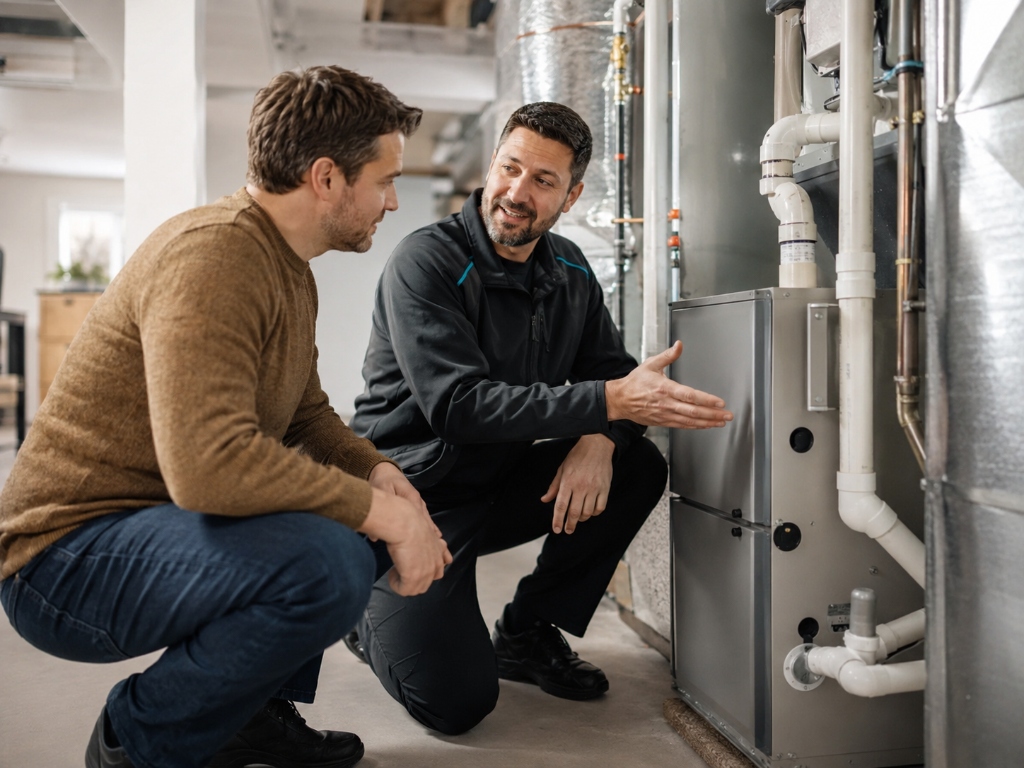
Our repairs isolate the specific circuit rather than replacing the whole heater assembly. Electrical safety comes first — voltage, grounding, and breaker sizing are verified before any component work begins.
Electrical Safety First
Amp-clamp diagnosis identifies the specific element, sequencer or control that has failed — not a guess based on symptoms.
Typical Draw
40–80+ amps
Diagnosis
Stage-by-stage amp test
Electric furnace repair is the diagnosis and correction of a fault in a heat-strip forced-air heating system. That typically involves the heating elements, the sequencer that stages them on, the contactor or relay, high-limit safety switches, the blower motor and capacitor, thermostat wiring, and the breaker or disconnect that supplies the unit.
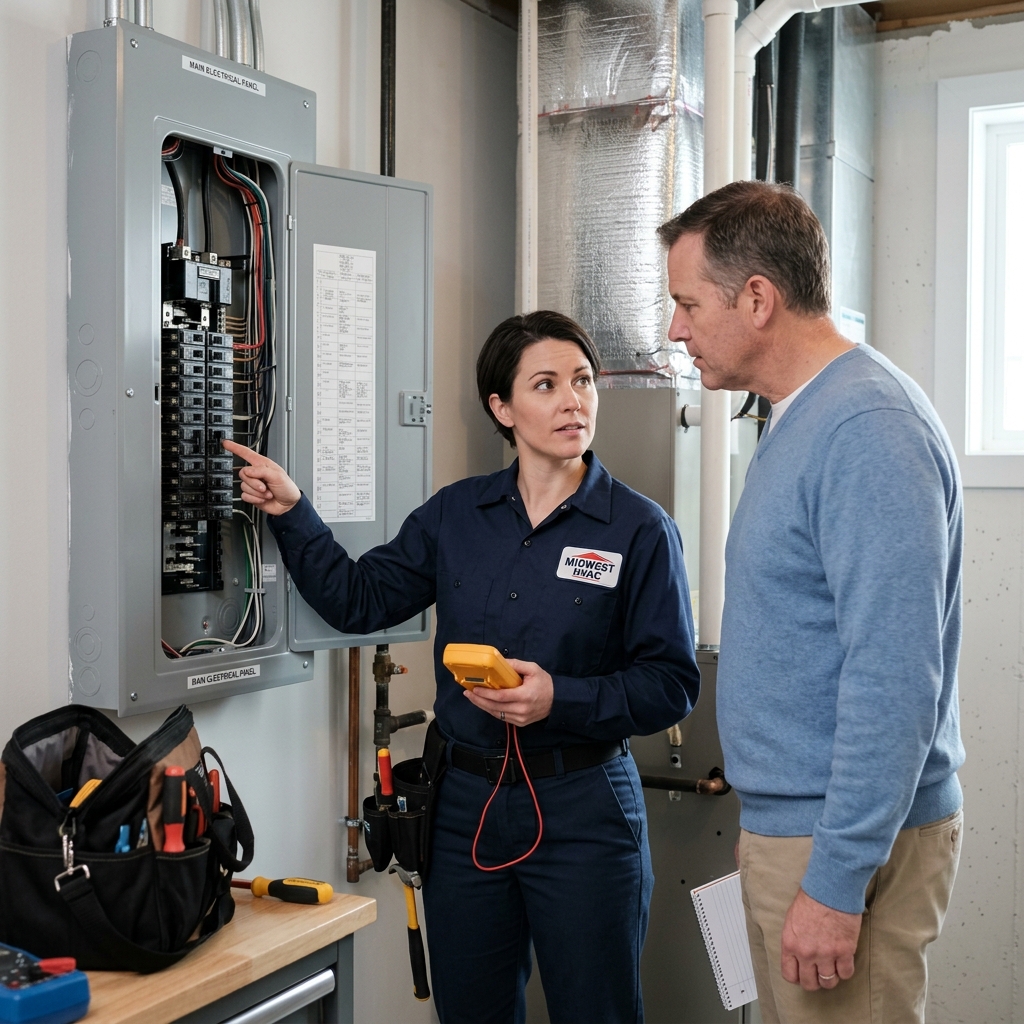
Disconnect is inspected, breaker size confirmed against nameplate, and line voltage verified present and within spec before any cabinet work begins.
Transformer output, thermostat call, and sequencer coil voltage verified. A single shorted low-voltage wire can burn a transformer or lock a sequencer on.
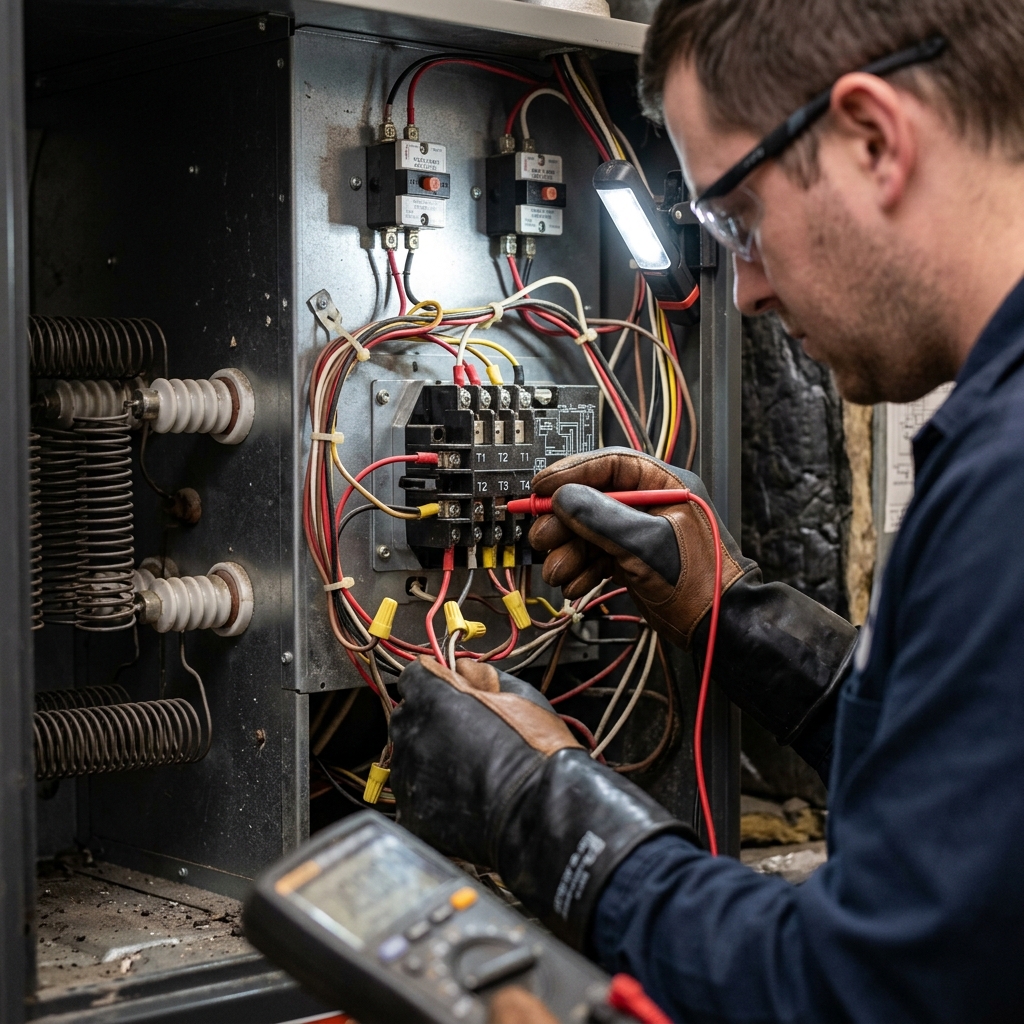
With the sequencer commanded on, contactor stages are watched to energize in sequence. Amp readings taken on each strip circuit to identify open or shorted elements.
An open element reads zero amps; a shorted element pulls higher-than-nameplate current. Each stage is tested individually against the manufacturer's specifications.
High-limit switches tested for continuity when cool and confirmed to open at the correct temperature. Rollout and overheat safeties verified.
Blower motor amp draw, capacitor microfarad rating, and static pressure across the coil complete the airflow side. Restricted returns cause repeated high-limit trips.
Electrical safety: Electric furnaces draw significant current — often 40 to 80 amps or more. Any smell of burning insulation, discolored breaker, or scorching at the disconnect is a stop-and-call situation.
A repair is done component by component, tested with instruments, not assumptions.
Component-Level Testing
No combustion side to worry about — the failure is almost always electrical.
Sequencer, element, contactor, high-limit, blower — each tested individually with instruments.
Single Component
Under 1 hour typical
Motor / Inducer
1–2 hours typical
Unlike gas furnaces, electric furnaces have no combustion side — no ignition, no flame sense, no venting failures. The failure is almost always electrical, and the instrument shows what the eyes cannot.
Electric furnaces are mechanically simpler, with fewer moving parts. Their most common failures are sequencers and blower components.
The failure mode is almost always visible on the instrument.
Common Electric Furnace Faults
Each symptom below points to a specific component or circuit failure that instrument-based testing can identify.
Blower runs but supply air is cool. Usually a failed element, stuck sequencer, or tripped high-limit that has not reset. Amp-clamp testing identifies which stage is not drawing.
Ignition-style diagnostics do not apply to electric furnaces. The check goes straight to control voltage, sequencer staging, and element continuity — a different diagnostic path than gas systems.
A dedicated furnace breaker that trips on call may indicate a shorted element, damaged wiring, or an oversized current draw. Do not repeatedly force-reset — leave the breaker open and call for service.
Elements come on too slowly, all at once, or not at all. Sequencer contacts have failed or are chattering. A worn sequencer is a common failure after 8–12 years of service.
Elements may heat but with no airflow the high-limit trips for protection. Often a blower motor failure, blown capacitor, or seized bearing.
Restricted return, plugged filter, or failing blower reduces heat transfer and causes limit-tripping. The elements are fine but cannot deliver heat without air movement.
Thermostat call is stuck on, a sequencer contactor is welded closed, or the control circuit is not opening as expected. The system never reaches set temperature.
One or more heating stages are failing, so only partial capacity is available. The home warms slowly or cannot reach the set temperature on cold days.
Breaker tripping repeatedly?
Do not force the breaker back on. Leave it open and call for service. Burning smells, visible smoke, or scorching at the breaker or disconnect are electrical emergencies — turn power off at the disconnect if safe and call 911 if smoke continues.
Electric furnaces are common in Pinehurst-Beverly Park and Twin Creeks townhome developments and in older Westmont and Boulevard Bluffs single-family homes.
Electrical safety first, instrument-based diagnosis second, written scope before any parts are ordered. Every step is deliberate.
Schedule
Tell us what the furnace is doing — no heat, weak heat, tripping breaker, burning smell — so the diagnosis starts in the right place and the right tools are on the truck.
Safety
Voltage, breaker size, disconnect condition, and wiring insulation are checked before any component work begins. Any scorching, discoloration or heat damage at the breaker needs an electrician.
Diagnose
Instruments identify the specific element, sequencer, contactor or motor that is not performing to spec. Each heating stage is tested independently with amp readings.
Repair
Component replaced, staging observed for correct sequence, and post-repair amp readings recorded on every stage. The system is verified to operate correctly before the visit ends.
Electric Furnace Parts and Controls
Most single-component repairs take under an hour once diagnosed. Blower motors and inductors run one to two hours. Deeper diagnostic time is added if the failure is intermittent.
Electric heat is straightforward once it is diagnosed component by component. The failure mode is almost always visible on the instrument.
Our Repair Principle
Isolate the circuit. Don't replace the assembly.
Component-level diagnosis means you pay for the part that actually failed — not a whole-heater swap when a single element is open.
Every heating stage is measured with a clamp ammeter. An open element reads zero amps; a shorted element pulls higher-than-nameplate current. The instrument tells the story.
On most units, individual strips are replaceable. Whole-heater replacement is only recommended when the frame or wiring has been damaged, or when multiple strips have failed and the assembly is at end of life.
Every repair ends with a written explanation — what component failed, why it failed, and what it means for the remaining system. No mystery, no jargon.
Any scorching, discoloration, or heat damage at the breaker or disconnect needs an electrician, not a furnace tech. When the fault is upstream of the furnace, we identify it and coordinate the right trade.
Newer Cascade View and Glacier View builds sometimes pair an electric furnace with an add-on heat pump. We treat the two as one system — the diagnosis includes reversing-valve and defrost logic.
We service Nordyne, Coleman, Goodman, Lennox, and Trane electric furnaces common in the Everett area. Element voltage, wattage, and physical dimensions are confirmed before the repair visit.
Request Electric Furnace Service
Include the furnace brand, approximate age, and whether it's paired with a heat pump. Mention any breaker trips, burning smells, or recent changes.
Electric furnace diagnostics and repair are scheduled from our Everett hub to homes across Everett neighborhoods and nearby Snohomish County communities — same team, same process, verified coverage.
Click any location below to view local service details
Don't see your neighborhood? Call us to verify dispatch to your exact address.
View Full Area GuideInteractive Service Map
Everett, WA & Snohomish Metro
These answers cover electric furnace symptoms, component failures, operating costs, brand coverage and conversion options.
Diagnosis
Component-by-Component
Safety
Electrical First, Always
No combustion side. The failure is electrical.
Simpler system, instrument-based diagnosis, written scope before any parts are ordered.
Need electric furnace service?
Describe the symptom — no heat, weak heat, tripping breaker.
Call (425) 380-0422Before Calling for Service
Open a question to learn more about electric furnace symptoms, repairs, operating costs and conversion options.
The blower is running but no heat is being produced. The most common causes are a failed sequencer that is not staging elements, an open heat-strip element, a tripped high-limit that has not reset, or a thermostat call that never reaches the control board. Component-level testing identifies which one it is.
No — they are mechanically simpler, with fewer moving parts. Their most common failures are sequencers and blower components. Because they have no combustion side, they do not have ignition, flame-sense, or venting failures at all.
On most units, individual strips are replaceable. Whole-heater replacement is only recommended when the frame or wiring has been damaged, or when multiple strips have failed at the same time and the assembly is at end of life.
Treat it as a stop-and-call situation. A repeatedly tripping breaker means either a fault in the furnace (shorted element, damaged wiring) or a fault in the breaker itself. Do not repeatedly reset the breaker; leave it open until the cause has been identified.
Electric heat costs more per BTU than natural gas at current Puget Sound Energy rates. Pairing an electric furnace with an outdoor heat pump changes the economics substantially — the heat pump does most of the work above roughly 35°F and the strips act as backup. See replacement planning for options.
We service the common brands sold in the Everett area, including Nordyne, Coleman, Goodman, Lennox, and Trane electric furnaces. Element voltage, wattage, and physical dimensions vary; we confirm the correct part number before the repair visit.
A sequencer is a small time-delay relay with a bimetal heater that closes contacts on a delay when energized. It exists to prevent all heating stages from starting at once, which would overload the electrical service. The contacts wear or the bimetal fatigues; typical service life is 8–15 years.
Yes, if gas service is available at the property. The conversion involves a new furnace, gas piping, venting, and coordination with Puget Sound Energy for the meter and service. It is a planning conversation, not a same-day project — start with installation planning.
Electric Furnace Acting Up?
Component-level diagnosis, clear pricing, no upsells.
Electric furnaces draw 40–80+ amps. Any burning smells, discolored breakers or scorching at the disconnect are electrical emergencies. Turn off power and call for service immediately.
Electric Furnace Repair · Everett, Washington
Component-level diagnosis, clear pricing, no upsells. Describe the symptom — no heat, weak heat, tripping breaker — and include the furnace brand, approximate age and whether it's paired with a heat pump.
Repair scope and pricing depend on the specific component, furnace brand, age and electrical supply configuration. Maintenance, inspection, cleaning and replacement are separate services.