Buying a Home in Everett
Before closing on a property — especially when the general home inspection flagged the furnace or when the equipment is over 10 years old. The report informs purchase decisions and negotiations.
Structured, Instrument-Based Heating System Evaluation
A furnace inspection documents the current condition of the heating system using a structured checklist, calibrated instruments and photographic evidence. Furnace Everett Pros provides furnace inspection services in Everett, WA for gas and electric forced-air systems.
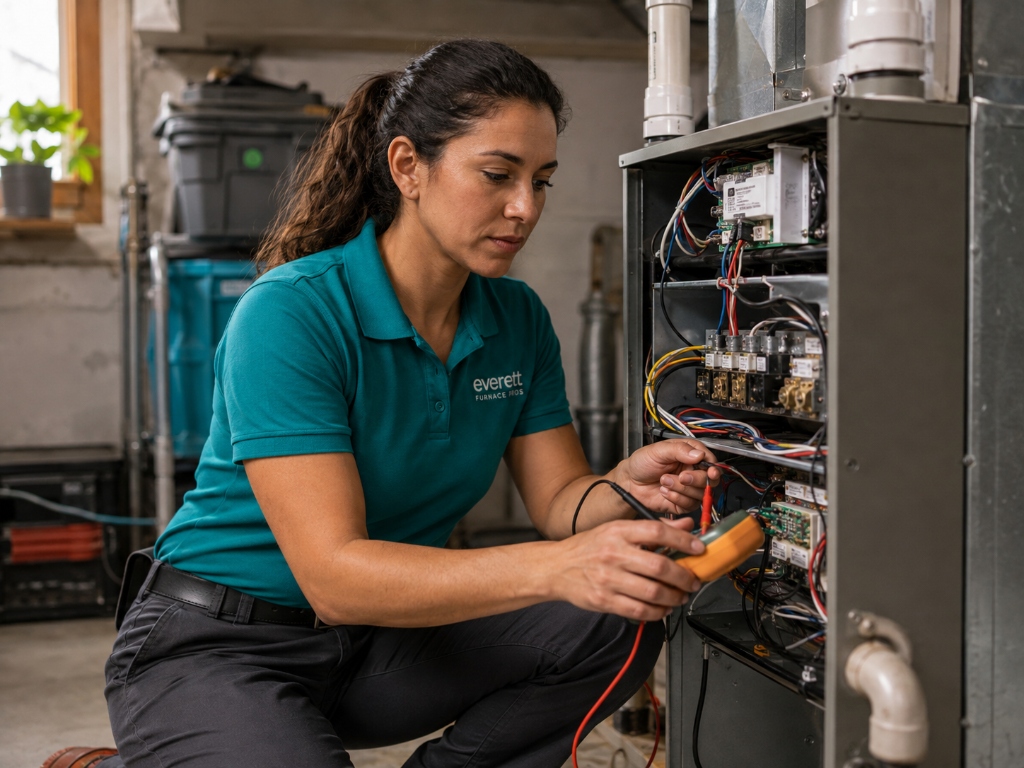
The inspection scope covers thermostat operation, ignition or heating-element circuits, combustion or amp-draw readings, safety devices, airflow, venting and visible equipment condition. The result is a written report with photos and instrument readings.
Inspection Scope
The written report includes instrument readings, photos and identified findings for your records.
Covers
Operating condition & safety
Delivers
Written report with photos
A furnace inspection in Everett, WA evaluates the operating condition, safety and installation of a residential heating system using a structured checklist and calibrated instruments. The scope covers gas and electric forced-air furnaces and produces a written report with photos and instrument readings.
Cabinet surfaces, wiring condition, corrosion, water damage and prior repair evidence are documented as part of the visible-condition review.
Thermostat operation, control-board response and low-voltage circuit integrity are verified to confirm the system responds correctly to heating calls.
On gas furnaces, the ignition circuit is tested and combustion analysis measures O₂, CO and stack temperature. On electric systems, amp-draw testing covers every heat-strip stage.
Filter condition, static pressure across the coil, blower amp draw and capacitor rating are evaluated on the air-handling side of the system.
Limit switches, rollout switches, pressure switches and flame-rectification current are tested for correct operation on the running furnace.
Flue integrity, vent slope, termination location and draft condition are inspected on gas systems. PVC vent and drain routing are reviewed on condensing equipment.
A furnace inspection does not automatically include cleaning, repair, parts replacement, duct cleaning or corrective adjustments. Those are separate services with their own scope.
The final scope depends on furnace type, visible condition and equipment accessibility.
Inspection Coverage
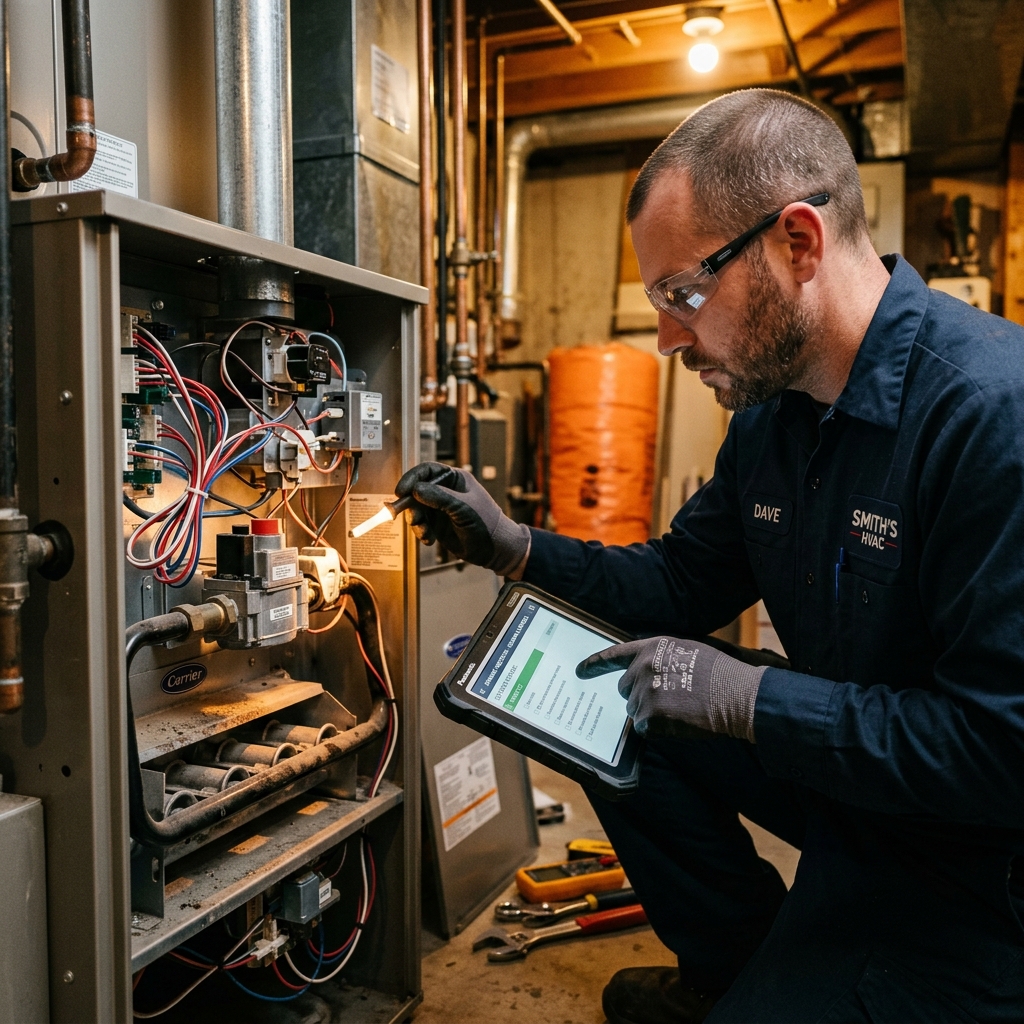
Every component checked against a structured checklist.
The report includes instrument readings and photos for every applicable category.
Service Area
Everett, Washington
System Types
Gas and Electric
A furnace inspection may be appropriate when you need documented evidence of heating system condition for a specific purpose — home purchase, safety verification, second opinion, insurance documentation or baseline evaluation of inherited equipment.
These situations do not automatically confirm that inspection is the only service needed. Active heating failures, no-heat emergencies and equipment that will not start generally require repair diagnosis rather than a documentation-only visit.
An inspection documents current condition, but active heating failures may require diagnosis and repair.
Common Inspection Scenarios
The following situations account for most furnace inspection requests in the Everett area.
Before closing on a property — especially when the general home inspection flagged the furnace or when the equipment is over 10 years old. The report informs purchase decisions and negotiations.
A new owner, landlord or property manager who needs a baseline record of equipment condition. The report documents what the system is doing at the time of the inspection.
A recurring problem that has not been diagnosed by prior service calls. An inspection follows a structured checklist that may identify what a single repair visit missed.
Any recent combustion smell, warm-cabinet complaint, CO alarm event or unusual odor that has since cleared. An inspection documents whether the system is operating safely.
Documentation of current equipment condition for an insurance claim, warranty support request, manufacturer inquiry or landlord-tenant record.
An independent evaluation after a repair recommendation you are not sure about. The report provides a documented, instrument-based assessment you can compare against the original recommendation.
Inspection may not be the right first step
No heat, repeated shutdowns, safety lockouts, unusual noises and burning odors may require furnace maintenance or furnace repair in Everett rather than a documentation-only inspection.
Persistent electrical odors, smoke, sparks, repeated breaker trips, natural-gas odors or carbon-monoxide alarms should be treated as safety emergencies rather than routine furnace inspection requests.
The inspection process begins with understanding why the evaluation is needed, followed by a structured checklist review, instrument-based documentation and a written report delivered before the visit ends.
Request Review
Share the Everett property location, furnace fuel type and reason for requesting the inspection. Helpful context includes home purchase timelines, unresolved heating symptoms, safety concerns or documentation requirements.
System Review
The furnace is reviewed in a fixed order: visible condition, controls and thermostat, ignition or heating-element circuit, combustion or amp-draw readings, safety devices, airflow and venting. Instruments are used at every applicable step.
Documentation
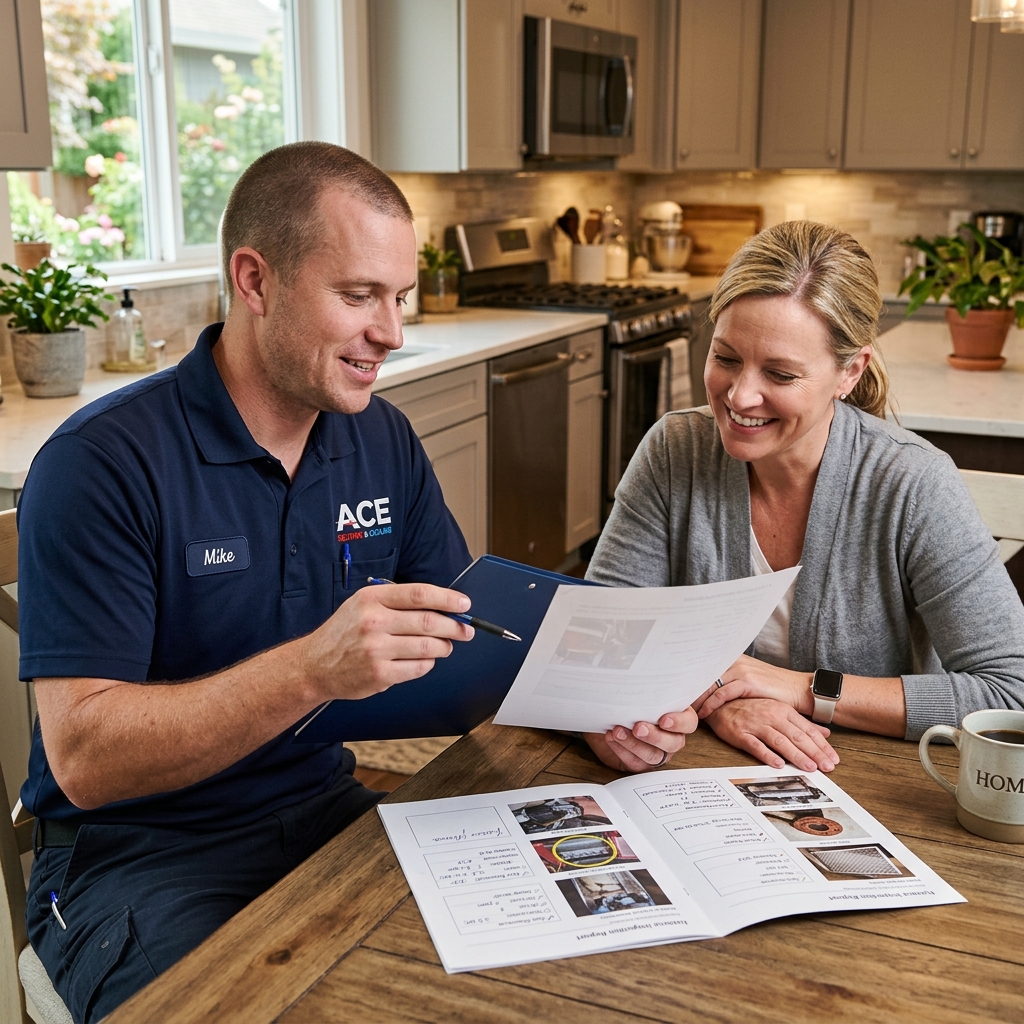
Every finding is documented with photos, instrument readings and written observations. The report is assembled on site and includes the checklist results, identified concerns and any recommended follow-up.
Report Delivery
The completed report is reviewed with you before the technician leaves. Questions are answered, identified findings are explained and any recommended next steps — maintenance, repair or monitoring — are discussed without obligation.
Preparing for Furnace Inspection
The exact inspection process depends on the furnace type, fuel source, equipment access and visible condition. An inspection documents current operating condition and does not guarantee that the furnace will not develop a problem after the visit.
Furnace inspection should begin with a clear checklist, calibrated instruments and a commitment to documenting what the system is actually doing — not what the inspector assumes. This approach helps Everett homeowners understand equipment condition, plan informed decisions and share findings with other parties.
Our Inspection Principle
Document what the system is doing — not what you expect.
Instrument readings and photos replace assumptions and provide evidence you can share with confidence.
The inspection follows a structured checklist so the report is consistent, comparable and complete. Every visit covers the same categories regardless of the furnace brand, model or age.
Combustion analysis, amp-draw testing, static-pressure measurement and safety-switch verification provide documented evidence of operating condition — not subjective impressions.
An inspection documents what the system is doing today. Repair recommendations, parts quotes and corrective work are discussed separately so the evaluation is not influenced by a sales agenda.
Gas systems receive combustion analysis; electric systems receive amp-draw testing on every heating stage. Both receive airflow, safety-device and visible-condition evaluation.
The written report with photos and readings is designed for home purchases, insurance documentation, warranty support, landlord-tenant records and second-opinion evaluations.
The property address, ZIP code, furnace location and access details help confirm service coverage and prepare for the equipment configuration found in the Everett home.
Request Furnace Inspection in Everett
Include the furnace type, property address and whether the inspection is for a home purchase, safety concern, documentation or second opinion.
The inspection scope depends on furnace type, fuel source, equipment accessibility and visible condition. Additional maintenance, diagnostic or repair work should be reviewed separately before authorization.
Furnace inspection visits are dispatched from our Everett hub to homes across Everett neighborhoods and nearby Snohomish County communities — same technicians, same checklist, verified coverage.
Click any location below to view local service details
Don't see your neighborhood? Call us to verify dispatch to your exact address.
View Full Area GuideInteractive Service Map
Everett, WA & Snohomish Metro
These answers explain what a furnace inspection covers, how it differs from maintenance and repair, and when a documented evaluation may be more appropriate than a service call.
System Types
Gas and Electric Furnaces
Deliverable
Written Report With Photos
An inspection documents current condition. It does not predict future performance.
No heat, repeated shutdowns, cool air and unusual noises may require a separate repair evaluation.
Not sure which furnace service you need?
Describe the furnace condition, any symptoms and the reason for your request when submitting.
Call (425) 380-0422Before Requesting Service
Open a question to learn more about inspection scope, report detail and related furnace services. The final scope depends on the furnace type, design and visible condition.
A furnace inspection reviews operating condition, safety and installation of the heating system. It covers thermostat operation, the ignition or heating-element circuit, combustion analysis or amp-draw testing, safety switches, electrical connections, blower operation, airflow, venting and visible equipment condition. The result is a written report with photos and instrument readings.
A single-furnace residential inspection is typically 60 to 90 minutes on site, plus 15 to 30 minutes to prepare the written report. Homes with multiple furnaces, limited equipment access or complex duct configurations may require additional time.
No. An inspection documents the current condition of the heating system without performing cleaning or adjustments. Furnace maintenance includes preventive cleaning, safety testing and minor adjustments as part of the visit. The two services address different needs.
Yes. The report includes photos, instrument readings and identified findings, and is designed to inform purchase decisions or negotiations. Buyers regularly share it with the seller's agent or with other contractors for repair estimates.
The inspection covers duct condition where it is visible and where it affects furnace operation — return-side restrictions, obvious leakage and static pressure. A full duct system evaluation is a separate scope of work.
Yes. On gas systems, CO is measured at the flue and in the ambient air during operation. Any elevated reading is documented immediately and communicated before the visit ends.
The report identifies current condition and any safety findings. Whether replacement is the right response is a separate conversation that considers the report, repair costs and household priorities.
Yes. Electric furnace inspection uses amp-draw measurement on every heat-strip stage, sequencer function testing and high-limit verification — the equivalent of combustion analysis on gas equipment.
Leave the property immediately and move to a safe location. Call 911 or the gas utility from outside the affected area. Do not operate light switches, appliances, phones or other devices near the suspected leak. A gas odor is not a routine furnace inspection request.
Provide the Everett property address and ZIP code, furnace fuel type, equipment location and reason for requesting the inspection. Mention the context — home purchase, safety concern, second opinion, insurance documentation or unresolved heating symptom — so the visit can be focused appropriately.
Need Help Choosing a Service?
The information you provide can help distinguish an inspection request from maintenance, cleaning or furnace repair.
Furnace type, accessibility, equipment age and inspection purpose determine the appropriate scope. Inspection, maintenance, cleaning and repair address different needs and should not be treated as interchangeable services.
Furnace Inspection · Everett, Washington
Tell us why the inspection is needed — home purchase, unresolved heating symptom, safety concern, documentation or a second opinion. Include the furnace type, property address and any relevant history so the visit can be focused on what matters most.
Inspection scope, scheduling and report detail depend on the furnace type, equipment access, visible condition and Everett property location. Furnace repair, maintenance and cleaning are separate services.