No Heat at All
The blower runs or the unit is silent, but no warm air is reaching any room and the home is losing temperature. With pipes at risk of freezing or vulnerable family members, this is the core emergency scenario.
Safety-First Response for No-Heat Emergencies
A furnace that stops producing heat during a wet Everett cold snap is more than an inconvenience — with young kids, elderly family members, or pipes at risk of freezing, it becomes a household emergency.
When you reach out, a technician talks through what the furnace is doing, helps you decide whether the situation calls for a service visit or an immediate safety response, and schedules urgent service where appropriate.
Smell gas or CO alarm sounding? Leave the home first. Call 911 or Puget Sound Energy at 1-888-225-5773. Furnace repair is scheduled after the property is safe.
Urgent Heating Service
Including telling you to call 911 or the gas utility when that is the right first response.
On the Phone
Technician triage
On Site
Safety verified first
An emergency furnace repair addresses a heating system that is producing no heat, shutting down repeatedly, throwing safety codes it will not clear, or showing signs of an unsafe condition — smoke, burning odors, or a triggered carbon monoxide alarm.
It is different from routine repair because the goal is to restore safe operation quickly and stabilize the situation, even if a full parts-level fix has to be scheduled the next business day.
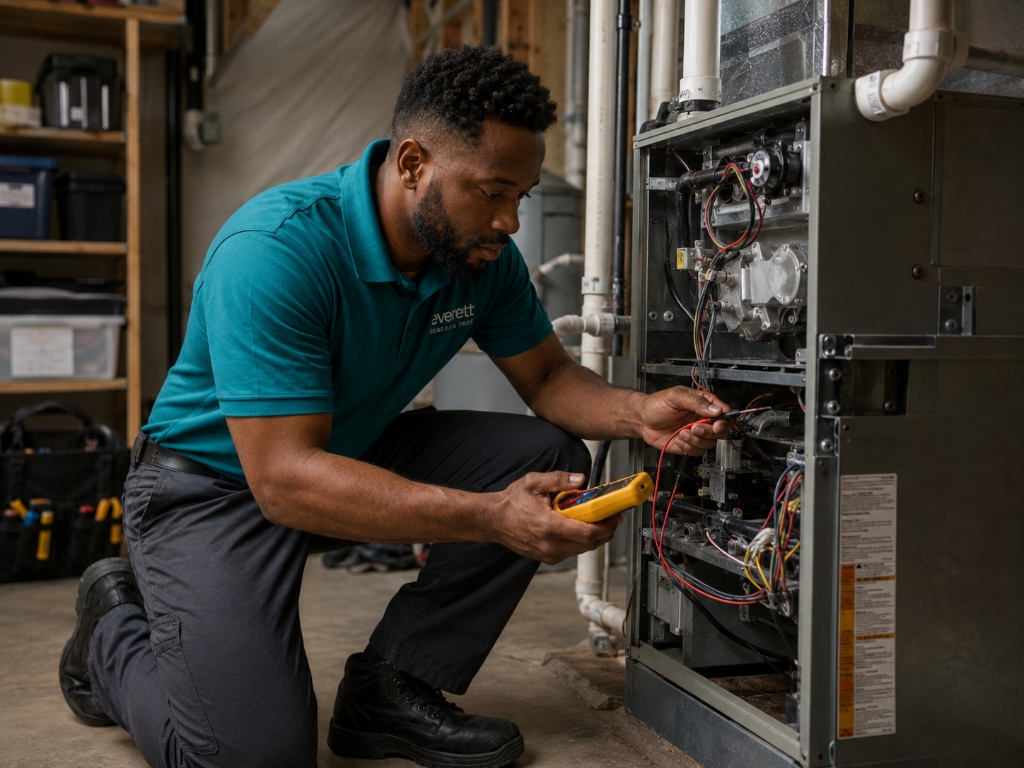
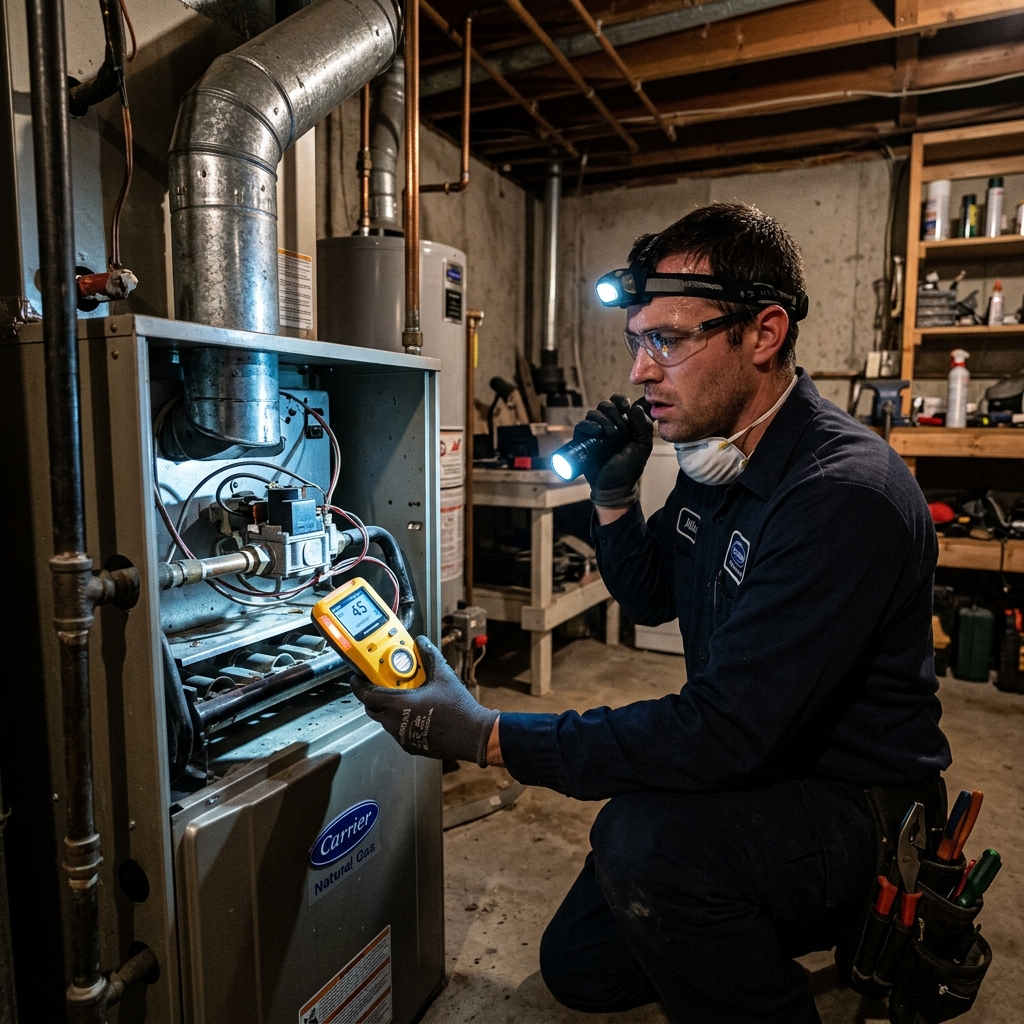
Combustion testing on gas furnaces, CO monitoring, visual inspection for damaged wiring or scorching, and a check that the shutoff and disconnect are working. The space is confirmed safe before the cabinet is opened.
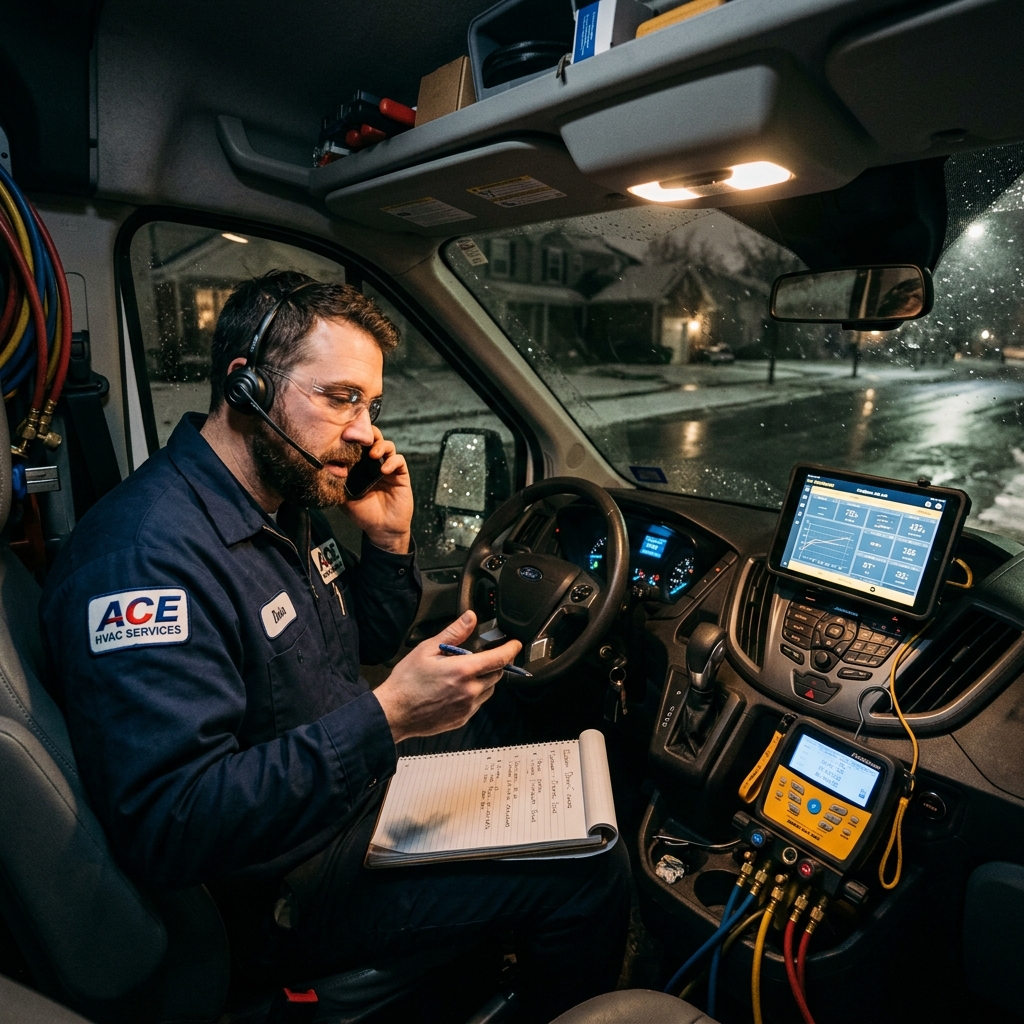
The first step happens on the phone. A technician asks what you are seeing, whether anyone smells gas, and whether safety alarms are sounding. This conversation sorts real emergencies from problems that can wait until morning.
Only after the space is confirmed safe do we open the cabinet to diagnose the specific failure. The same instrument-based process used during scheduled visits is applied — no shortcuts because it is after hours.
Common failures we carry on the truck — ignitor, flame sensor, capacitor, pressure switch, some blower motors — can typically be completed on the first visit without a return trip.
Control boards and OEM-specific parts often need to be sourced the next business day. When that happens, we stabilize the system if it is safe to do so and schedule the return visit.
You get a written explanation of what was found, what was done to make the system safe, and what parts or additional work are needed — before the technician leaves.
When to call 911 first: Leave the home and call 911 if you see fire or heavy smoke. Call Puget Sound Energy at 1-888-225-5773 if you smell natural gas or hear hissing near a gas line. Call 911 for any suspected CO exposure with headaches, nausea, or confusion.
A technician assesses the call — not a scheduling script.
Safety-First Diagnosis
CO monitoring and combustion check before the cabinet opens.
The space is confirmed safe before any component work begins — no shortcuts because it is after hours.
Common Parts
Same-visit repair
OEM / Board
Stabilize + return visit
Not every furnace problem is an emergency. Some can wait until morning. The situations below are the ones that typically cannot — because of safety, comfort, or the risk of further damage.
Urgent calls are handled by technicians, not scripts.
When to call 911 or Puget Sound Energy first:
Urgent Furnace Situations
Each scenario below warrants an urgent call. A technician helps you determine the right response on the phone before scheduling a visit.
The blower runs or the unit is silent, but no warm air is reaching any room and the home is losing temperature. With pipes at risk of freezing or vulnerable family members, this is the core emergency scenario.
Nothing responds when the thermostat calls for heat — no ignition sequence, no blower, no display change on the control board. Complete failure to respond.
The furnace lights, runs briefly, then locks out on a limit or flame-sense fault and refuses to restart. Each restart attempt risks additional wear on the ignitor and safety controls.
Persistent smells of hot plastic, electrical burning, or scorched wiring coming from the cabinet or nearby vents. Turn the thermostat off and leave it off until diagnosed.
A sudden bang on ignition, sustained scraping from the blower, or a metallic grinding that was not present before. Continued operation risks further damage to the motor or cabinet.
The furnace circuit trips every time the system tries to run, or the breaker will not reset without immediately re-tripping. Do not force the breaker — leave it open.
Any smoke from the cabinet, flue, or supply registers should be treated as a shut-off-and-call situation. If smoke is heavy or continuing, leave the home and call 911.
A triggered CO alarm is a life-safety event. Leave the home, then call 911 and the gas utility before scheduling furnace repair. The furnace may or may not be the source.
Older homes in North Everett and Bayside tend to have long-service furnaces where flame sensors and limit switches are the most common urgent failures. Newer construction in Silver Lake and View Ridge-Madison sees more control-board and inducer-related lockouts.
Phone triage first, safety verification on site, instrument-based diagnosis, written explanation of findings and next steps. Every step is deliberate — even under urgency.
Phone
A technician asks what the furnace is doing, whether anyone smells gas, and whether safety alarms are sounding — before anything else. This conversation steers you toward the right response.
Schedule
If a visit is appropriate, we confirm a service window and give you an estimated technician arrival time in writing. Not every after-hours call needs a same-night visit — the technician helps you decide.
On-Site
Combustion, CO, and electrical checks run before the cabinet opens. The space is confirmed safe before any parts work. The same instrument-based process used during scheduled visits — no shortcuts.
Resolve
We complete the repair if we carry the part, or make the system safe and schedule the return visit. You get a written explanation of what was found and what happens next — before the technician leaves.
Common Urgent Failures We Carry Parts For
Urgent calls are handled by technicians, not scripts. When someone with heating and gas experience picks up the phone, the conversation gets to the right answer faster.
Our Emergency Principle
Make the system safe. Then restore heat.
The emergency visit stabilizes the situation. Replacement planning happens later, with a clear head and a written comparison.
When someone with heating and gas experience picks up the phone, the conversation gets to the right answer faster — including the answer that the situation needs a fire response or the utility, not a service visit.
Combustion testing, CO monitoring, and electrical inspection happen before the cabinet opens. The space is confirmed safe before any component work begins — even at 2 a.m.
You get a written summary of what was found, what was done to make the system safe, and what additional work is needed. No verbal handwave — documentation you can refer to.
Not every heating emergency is a furnace service call. We are comfortable telling you to call the gas utility or 911 when that is the right answer — even though it means we don't dispatch a truck.
The purpose of an emergency visit is to make the system safe and restore heat. Replacement decisions are made calmly with a full written comparison, not under pressure at 11 p.m.
Part availability, equipment age, safety concerns, access — factors that determine if the repair can be completed tonight or needs a return visit. We tell you upfront, not after the fact.
Emergency furnace response is dispatched from our Everett hub. Coverage extends to verified nearby communities — same team, same safety-first process. Availability for urgent after-hours calls varies by area and by how many jobs are already in progress.
Click any location below to view local service details
Don't see your neighborhood? Call us to verify dispatch to your exact address.
View Full Area GuideInteractive Service Map
Everett, WA & Snohomish Metro
These answers cover what qualifies as an emergency, gas safety protocols, same-visit repair likelihood, pricing, CO alarms and coverage area.
Phone Triage
By a Technician
On-Site
Safety-First Always
Make it safe. Then restore heat.
Safety verification, written findings, honest answers about repair vs. return visit.
No heat right now?
Describe what the furnace is doing — a technician assesses the situation on the phone.
Call Now: (425) 380-0422Before Calling for Emergency Service
Open a question to learn about emergency protocols, gas safety, same-visit likelihood, cost, CO alarms and coverage.
We schedule urgent furnace service based on availability and the nature of the problem. Not every after-hours call requires or benefits from a same-night visit — a technician talks through the situation first and helps you decide the appropriate response, which may be immediate service, first-thing next-day service, or a call to 911 or Puget Sound Energy.
Leave the home, do not operate any electrical switches, and do not restart the furnace. Once you are outside, call Puget Sound Energy at 1-888-225-5773 or 911. Furnace repair is scheduled after the utility has confirmed the property is safe.
For common failures — hot-surface ignitor, flame sensor, capacitor, pressure switch, some blower motors — we can typically complete the repair on the first visit. Control boards and OEM-specific parts often need to be sourced the next business day. When that happens, we stabilize the system if it is safe to do so.
Pricing depends on the diagnosis and any parts required. The technician provides a written scope and price before repair work begins. If a same-visit repair is not appropriate, we explain what will be scheduled and what to expect.
It may or may not be. A CO alarm is a life-safety event first: leave the home, call 911, and let first responders or the gas utility verify the space. A furnace inspection follows once the property is cleared.
If the furnace is short-cycling on a safety switch, producing burning odors, tripping the breaker, or making an unusual mechanical noise, turn the thermostat off and leave it off until a technician has diagnosed the problem. Continuing to run a furnace in that state can cause additional damage.
The purpose of an emergency visit is to make the system safe and, where possible, restore heat. Replacement decisions are separate — they are made calmly with a full written comparison. See replacement planning.
We provide furnace service in verified nearby communities including Mukilteo, Marysville, Lake Stevens, Mill Creek, Snohomish, Lynnwood, Bothell, and Edmonds. Availability for urgent after-hours calls varies by area and by how many jobs are already in progress.
Need Emergency Furnace Help?
A real conversation — not a scheduling script.
If you smell gas, leave the home and call Puget Sound Energy at 1-888-225-5773 or 911. If a carbon monoxide alarm is sounding, leave the home and call 911. Furnace service is scheduled after the property is confirmed safe.
Emergency Furnace Repair · Everett, Washington
Talk with a technician about what your furnace is doing and the best next step. A real conversation — not a scheduling script — that gets to the right answer fastest.
If you smell gas or a CO alarm is sounding, call 911 or Puget Sound Energy before calling for furnace service. Emergency furnace repair addresses furnace failures — it does not replace first-responder or utility emergency services.