Frequent Breakdowns
Multiple in-service failures in a single season, especially of different components. A pattern of small failures often outweighs a single expensive one.
Repair-Versus-Replace Analysis Before Any Recommendation
Replacement should be a decision made with numbers, not a sales pitch made under pressure. When an Everett furnace is past 15 years, showing repeated breakdowns, or facing a safety-driven issue, the right next step is an honest analysis: what is the repair cost, what is the projected remaining life, what does a replacement actually cost after available incentives, and what is the delta in operating expense.
We put that on paper before we recommend anything. No high-pressure timelines, no installation quoted before a load calculation, and no pressure to decide during the service visit.
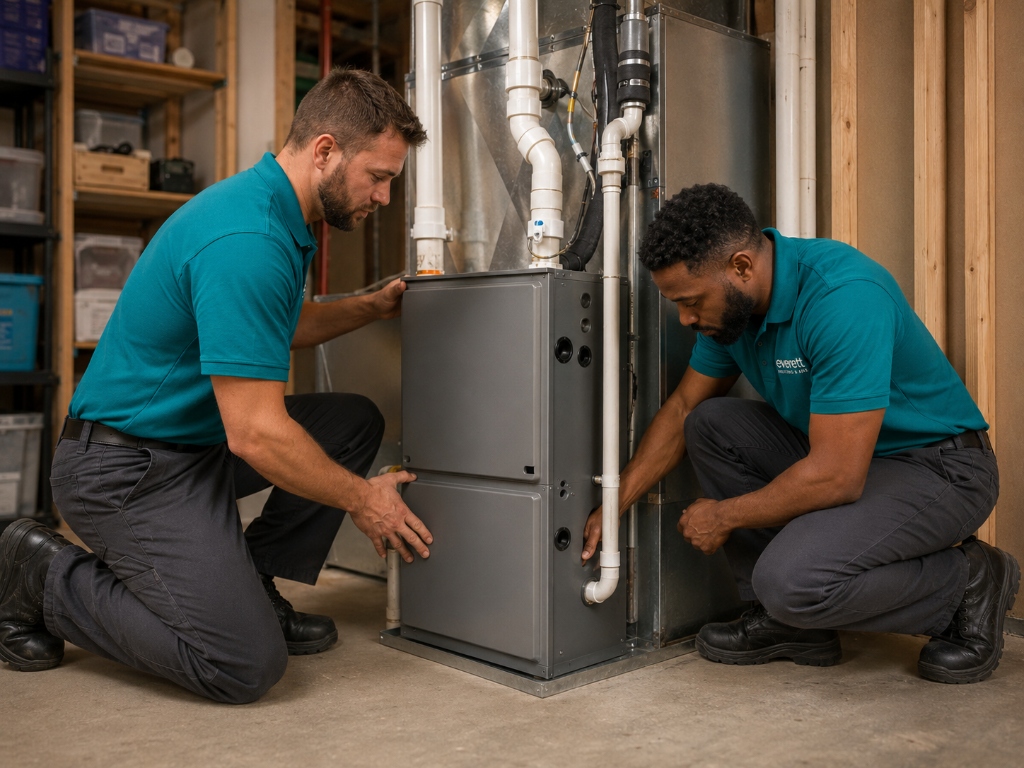
Our Approach
Written repair-versus-replace analysis with load calculation, incentive identification and no-pressure timeline.
Analysis
Repair vs. replace on paper
Sizing
Load-based, not oversized
The starting point is the current equipment. Next is the repair alternative. Then the replacement side. Both go on the same page. In many cases the honest answer is that repair still wins — a $600 repair on a 12-year-old furnace with a good maintenance history is almost always a better move than replacement. In others the numbers show replacement is the right call.
Age, nameplate efficiency, documented failures, combustion or amp-draw readings, heat-exchanger condition and overall wear are reviewed and recorded.
What it would cost to bring the existing system to reliable operation, with an honest assessment of how much service life is realistically left after the repair.
Matched equipment options — single-stage, two-stage or modulating — with load-based sizing, installed cost, applicable rebates and projected operating cost.
Existing ductwork, return air, venting, gas or electrical service and thermostat platform are assessed for compatibility with replacement options.
Current PSE, manufacturer and federal incentive programs are checked and noted so the comparison includes actual out-of-pocket cost.
Total cost, operating cost, expected service life and warranty terms for both repair and replacement are presented on the same page for your review.
Pressure to replace on the first visit — "this can't be fixed, we can install tomorrow" — is a red flag, not a recommendation. Ask for the written analysis first.
The decision is documented on paper, and the timeline is yours.
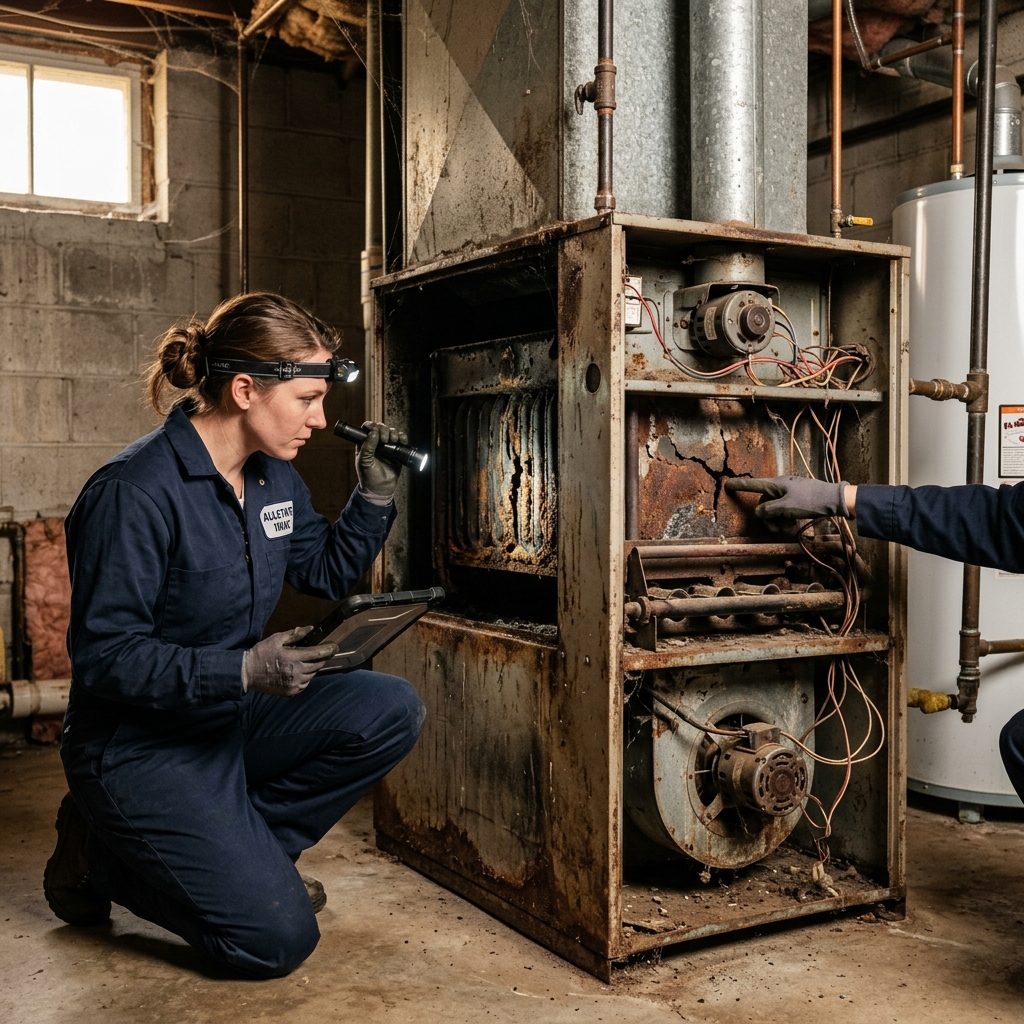
Equipment Assessment
Condition and economics drive the decision — not age alone.
A well-maintained 18-year-old furnace with clean readings may still be serviceable.
Approach
Written comparison first
Timeline
No-pressure decision
Replacement makes sense when the equipment is at end of service life, when parts are no longer available, when a safety issue is confirmed, when a single repair approaches half the cost of a new system, or when the household's heating needs have changed.
It does not make sense simply because a furnace is old, and it does not make sense as a response to a single manageable repair. The correct next step depends on the specifics of the equipment and the home.
Age alone is not a replacement trigger. Condition, safety and economics are.
Common Replacement Indicators
These situations have driven furnace replacement decisions in Everett homes. Not every indicator means replacement is the right answer — the analysis determines that.
Multiple in-service failures in a single season, especially of different components. A pattern of small failures often outweighs a single expensive one.
OEM components discontinued and no compatible aftermarket alternative available. Discontinued parts convert repair into an increasing gamble on equipment that cannot be maintained.
Visible cracks, holes, or combustion patterns that indicate exchanger failure. Any confirmed combustion or heat-exchanger safety issue is a replacement conversation.
A single repair — blower motor plus board plus inducer, for example — approaches replacement cost. The '50% rule' is a guideline: when a single repair approaches half the cost of replacement, replacement usually wins.
System runs continuously in mild weather or cannot maintain setpoint on cold days. Rooms farthest from the equipment never reach temperature.
Small repairs stacking every few months rather than every few years. The cumulative cost and inconvenience eventually exceed what a single replacement would have cost.
A confirmed safety finding — cracked heat exchanger, carbon monoxide readings, flame-rollout events — that cannot be corrected with a component-level repair.
Additions, changes in occupancy, or a shift to heat pump readiness for the future. The existing system may be undersized or incompatible with the household's direction.
Not sure if replacement is needed?
A furnace inspection can document the current condition of your equipment before you make a repair-or-replace decision. The inspection report provides the baseline for an informed analysis.
Natural-gas odors, carbon-monoxide alarms, visible flame outside the burner area and smoke from the furnace cabinet should be treated as emergencies — not routine replacement consultations.
The process starts with understanding the existing equipment, moves to a written side-by-side comparison, and only proceeds to installation when the numbers and your decision confirm it.
Assessment
We inspect the existing furnace, ductwork, venting, gas or electrical service and thermostat platform. Current equipment age, condition and documented history are recorded.
Analysis
You receive a written repair scope and a written replacement scope — repair cost, replacement cost with load calculation, applicable incentives, projected operating cost and expected service life — side by side.
Decision
Total cost, operating cost, rebates and expected service life are compared side by side. The timeline is yours — there is no reason to decide during a service visit and no reason to accept pressure.
Execution
Whatever the decision — repair, replacement or deferral — we schedule it. Replacement is typically a one-day project with the heat off for most of the working day. If the home is occupied and temperatures are low, we plan around the coldest hours.
Replacement Planning Considerations
Emergency replacement is possible but suboptimal — planned replacement almost always produces a better result, better pricing and better equipment selection.
Replacement is a large expense, and the decision deserves the time to make it well. The approach below is designed to help Everett homeowners evaluate the numbers, understand the options and make a decision without pressure.
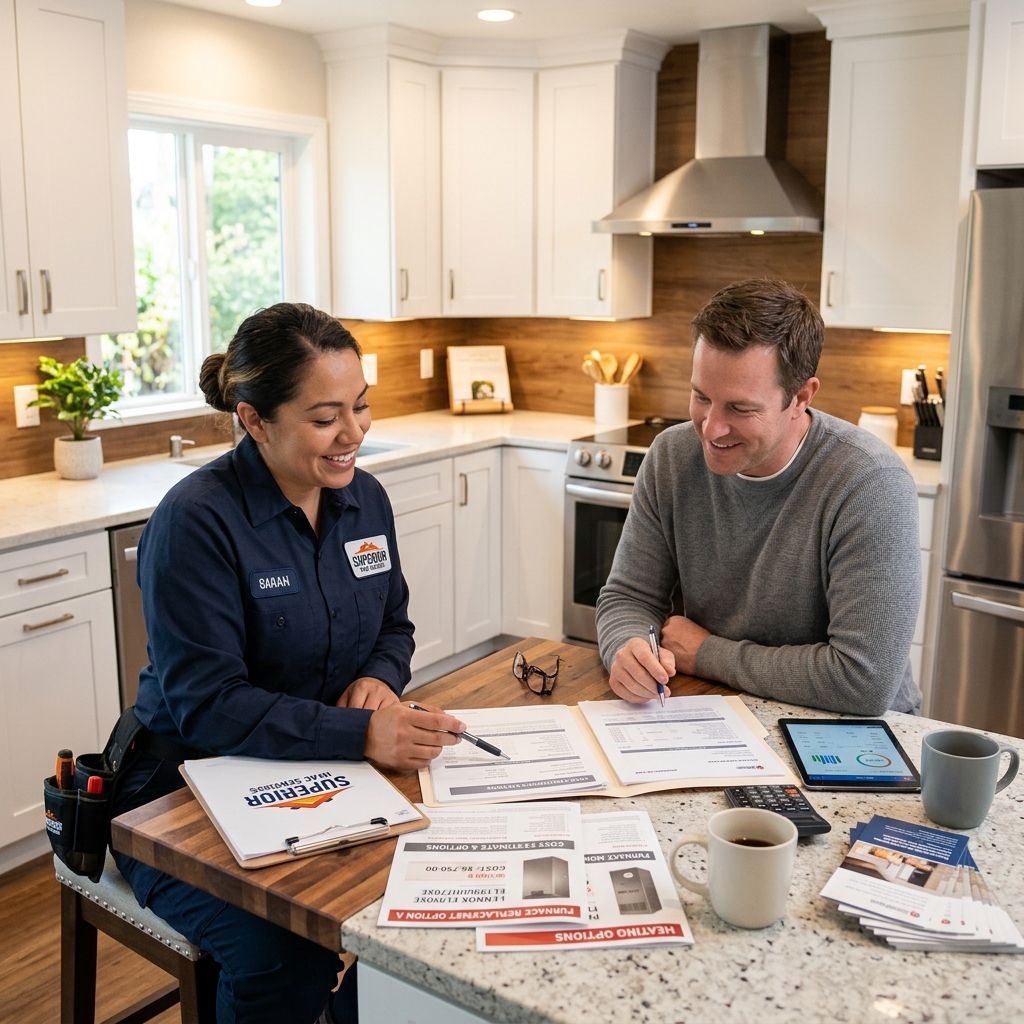
Our Replacement Principle
Numbers first. Recommendation second. Decision yours.
A responsible replacement recommendation is documented on paper, not delivered as an ultimatum during a service call.
Both options are presented on the same page with actual costs, projected service life and incentive information. The decision is made with numbers, not pressure.
Every replacement is sized to the home using a load calculation — not guessed from the nameplate of the old equipment. Oversized furnaces waste energy and cycle excessively.
PSE, manufacturer and federal incentive programs are checked and noted during the planning conversation so the comparison reflects actual out-of-pocket cost.
The timeline is yours. There is no reason to decide during a single visit, and there is no reason to accept 'this can't be fixed' without a written technical explanation.
In many cases a repair is the better move. We say so when the numbers support it, even when a replacement sale would be more profitable for us.
If the electrical service supports it, a heat pump paired with a compatible furnace as backup can be a strong long-term choice. It is presented when it fits the home — not as the default recommendation.
Start the Replacement Conversation
Include the furnace type, approximate age, property address and whether the concern is safety, performance, repair costs or general planning.
Equipment tier, existing infrastructure, rebate availability and the homeowner's timeline all influence the replacement scope and total cost. No two replacement projects are identical.
Replacement consultations and installations are scheduled from our Everett hub to homes across Everett neighborhoods and nearby Snohomish County communities — same team, same process, verified coverage.
Click any location below to view local service details
Don't see your neighborhood? Call us to verify dispatch to your exact address.
View Full Area GuideInteractive Service Map
Everett, WA & Snohomish Metro
These answers address the most common questions about furnace replacement timing, process, equipment options, costs and the repair-versus-replace decision.
Approach
Written Analysis First
Timeline
No-Pressure Decision
A responsible recommendation is documented on paper. Not delivered as an ultimatum.
The written analysis remains valid for the near-term planning window.
Ready to start the conversation?
Describe the furnace, the situation and your timeline.
Call (425) 380-0422Before Making a Decision
Open a question to learn more about replacement timing, process, costs and how the repair-versus-replace analysis works.
Manufacturers rate most residential furnaces for 15 to 20 years. Actual service life depends on maintenance history, run hours, combustion condition and installation quality. Well-maintained furnaces regularly reach and exceed the top of that range; neglected ones often fail short of it.
No. Age alone is not a replacement trigger. A well-maintained 18-year-old furnace with clean combustion readings, no safety findings and available parts can reasonably continue in service. Replacement is driven by condition, safety and economics — not the calendar.
A common industry guideline is that when a single repair approaches half the cost of replacement, replacement usually wins. It is a guideline, not a rule — remaining service life, safety findings and parts availability all influence the answer.
We install several major manufacturers and recommend based on the specific home, the load and the equipment tier that fits. There is no single 'best' brand for every situation; we explain the trade-offs on paper.
A standard replacement is a one-day project with the heat off for most of the working day. If the home is occupied and the outdoor temperature is low, we plan the schedule around the coldest hours.
Not usually. Existing ducts are inspected during planning; corrections are recommended only when there is a real airflow or condition problem. Full duct replacement is rare and only quoted when the existing system genuinely cannot support the new equipment.
Often, yes. If the electrical service supports it, a heat pump paired with a compatible furnace as backup can be a strong long-term choice. It is one of the options we present when it fits the home. Learn more about furnace installation options.
Financing options depend on the current lending environment and your qualification; we can discuss what is currently available during the planning conversation.
Leave the property immediately and call 911 or the gas utility from a safe location. Do not operate switches, phones or appliances near the suspected leak. A gas odor is a safety emergency — not a replacement consultation.
Contact us with the Everett property address, furnace type, approximate age and the reason replacement is being considered. We will schedule an assessment visit to evaluate the existing equipment, home infrastructure and replacement options.
Need Help With the Decision?
Describe the furnace condition, repair history and what prompted the replacement conversation.
Furnace type, age, condition, repair history, home infrastructure and the homeowner's timeline all influence the replacement decision. No two situations are identical, and the written analysis accounts for the specifics.
Furnace Replacement · Everett, Washington
Tell us about the furnace — type, approximate age, property location and the situation that prompted the conversation. We will start with the written analysis and go from there. Written comparison, no pressure, and no oversized equipment.
Replacement scope, equipment options, installed cost and timeline depend on the furnace type, home infrastructure, existing ductwork condition and Everett property location. Inspection, maintenance and repair are separate services.